
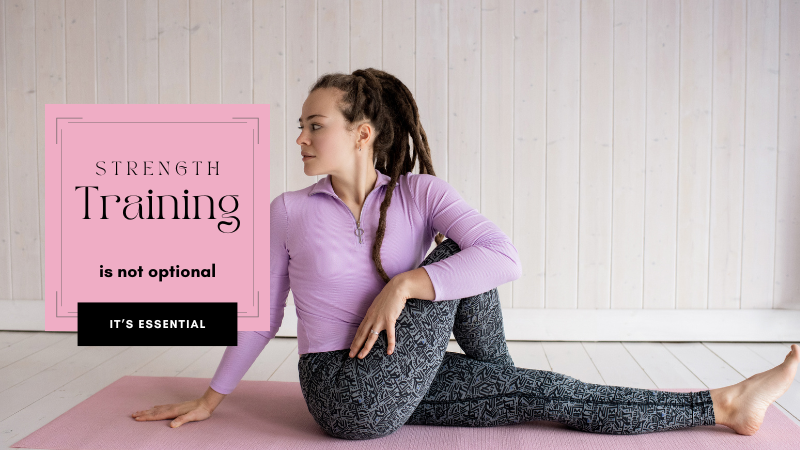
Walking is good. Zumba is fun. But after 50, there’s one thing your body is loudly asking for and most women aren’t giving it.
The Silent Shift during Menopause : No One Warns You About
Menopause isn’t just about your periods stopping. It’s a full-body biological transition and like most things in medicine, the surface-level story is nowhere near the complete one.
In the years that follow menopause, your body loses estrogen. And estrogen, it turns out, is doing a lot more behind the scenes than most people realize. It’s maintaining bone density. It’s helping preserve lean muscle mass. It’s regulating how your body distributes fat. When it drops, all of this shifts quietly, steadily and often invisibly.
Think of your body like a house. Before menopause, hormones are your maintenance team fixing the plumbing, keeping the roof intact, patching the walls. After menopause, that team retires. Strength training is how you become your own maintenance crew.
Here’s what’s actually happening in your body after menopause:
- Bone density declines rapidly, especially in the first 5 years post-menopause.
- Muscle mass decreases, and this accelerates after menopause.
- Fat, particularly visceral abdominal fat, redistributes inward.
- Metabolism slows, so fewer calories are burned at rest.
- Balance and reaction time begin to decline, raising fall risk.
The good news? Every single one of these can be meaningfully countered. And the most evidence-backed tool we have is resistance training.
Five Things Strength Training Does That Nothing Else Can Match
This isn’t about aesthetics though that’s a bonus. This is about function, independence, and longevity.
Protects Bone Density
Mechanical load on bone stimulates bone-building activity. Resistance training is one of the only lifestyle interventions shown to slow post-menopausal bone loss.
Preserves Muscle Mass
Less muscle means a slower metabolism, reduced strength, and a higher fall risk. Lifting weights even light ones tells the body to keep this tissue.
Revives Metabolism
Muscle is metabolically active. More muscle means more calories burned even while you’re sitting still.
Improves Balance & Coordination
Strength training improves neuromuscular control the communication between your brain and muscles which helps prevent falls.
Supports Mental Health
Resistance training has evidence for reducing anxiety and depression and may also support cognitive health.
Protects Heart Health
It can improve insulin sensitivity, lipid profile, and blood pressure important shifts after menopause.
Is Walking Enough?
Walking is excellent for cardiovascular health, mood, blood sugar regulation, and joint mobility. But it does not load bones and muscles enough to trigger the same adaptation as resistance training.
| Benefit | Walking | Strength Training |
|---|---|---|
| Heart health | ✓ Strong | ✓ Moderate-Strong |
| Bone density | ~ Minimal | ✓ Significant |
| Muscle preservation | ✗ Minimal | ✓ Strong |
| Metabolic boost | ~ Moderate | ✓ Strong |
| Balance & fall prevention | ~ Modest | ✓ Strong |
| Mood & cognitive benefit | ✓ Good | ✓ Strong |
The verdict: Walk, and keep walking. But add strength training to it. They are not competitors they’re teammates. Cardio builds your engine. Strength training builds the chassis.
What Exercises Should You Do?
You don’t need a gym membership, personal trainer, and a wardrobe of activewear. You need your body, some space, and maybe a resistance band or a pair of light dumbbells.
The goal here isn’t to turn you into a powerlifter. It’s to apply enough mechanical stress on your bones and muscles that your body responds by getting stronger.
How to Begin Without Hurting Yourself
The most common mistake is doing too much too soon. The second most common is never starting because the first attempt was uncomfortable.
Weeks 1–2 · Foundation
Start gently. 2 sessions per week. 10–15 minutes per session. Bodyweight only. Focus on learning movement patterns.
Weeks 3–6 · Building
Move to 3 sessions per week, 20–25 minutes. Introduce resistance bands or very light dumbbells. Track your reps.
Month 2 Onward · Progressing
Gradually increase weight or resistance. If it has become easy, you need to make it harder.
The golden rule: “Comfortably challenging” is what you’re aiming for — not pain, but definitely effort.
Do You Need a Trainer or Physiotherapist?
Ideally, yes at least initially. This is especially true if you have joint pain, osteoporosis, a history of fractures, or you have never exercised in a structured way before.
If access or cost is a barrier, start with bodyweight exercises and consider even a single consultation with a physiotherapist to review your technique before progressing.
Can Dancing or Zumba Replace Strength Training?
No. Zumba and dance are excellent for cardiovascular fitness, coordination, and joy. But they do not load your bones and muscles with sufficient progressive resistance.
Use Zumba the way you use a beautiful, energizing warm up. It gets your engine running. Strength training is the actual workout your skeleton is begging for.
The Habit That Changes Everything
If I could prescribe one lifestyle change for every woman in her late 40s and beyond, it would be this: start lifting something. Twice a week, 20 minutes, even from your living room.
Walking keeps you moving. Strength training keeps you strong, independent, and fracture-free for the decades ahead. It’s not vanity. It’s medicine. https://drsumandas.com/category/healthy/
Scientific References
- National Institute on Aging — Strength Training for Older Adults https://www.nia.nih.gov/health/strength-training
- International Osteoporosis Foundation — Exercise & Bone Health https://www.osteoporosis.foundation/health-professionals/prevention/exercise
- Harvard Health Publishing — Strength Training Builds More Than Muscles https://www.health.harvard.edu/staying-healthy/strength-training-builds-more-than-muscles
- Mayo Clinic — Strength Training: Get Stronger, Leaner, Healthier https://www.mayoclinic.org/healthy-lifestyle/fitness/in-depth/strength-training/art-20046670


4 Comments
Radhika
April 21, 2026Thank you, Dr Suman.
Very informative write up.
Dr Suman Das
April 21, 2026Thank you madam.Hope it encourages people to start exercising.
Gurmeet Kohli
April 21, 2026Thankyou for the excellent writeup,needs to be shared widely.
Monideepa Chakravarti
April 22, 2026Excellent. Beautifully articulated with analogies. Thanks a ton, Suman.